
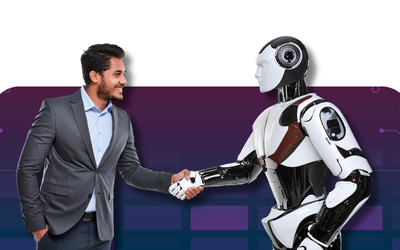





Build Real Robots. Spark Real Confidence.

70% practical, 30% theory — children spend most of their time building, not listening

Industry-grade kits: Arduino UNO, L293D motor driver, HC-05 Bluetooth, HC-SR04, IR sensors

Real capstone, real pitch, real judges on Innovation Showcase Day

Recognized Module Completion Certificate
from Elysium Embedded School

Trainer to student ratio of 1:8 for genuine one-on-one mentoring
Industry Demand Statement
Robotics is no longer a future skill - it is a today skill. Warehouse robots, hospital delivery bots, autonomous farm machines and surveillance rovers are already in production worldwide. Children who start building robots at 10 grow into the engineers, entrepreneurs and innovators who will lead the next decade of Industry 4.0.
Placement & Pathway Support Statement
Electrobot Junior is the foundation of a clearly mapped learning ladder. Students who complete Module 4 are directly eligible for Electrobot Senior, and over the long term move into Embedron, Embedron+ and EmbedX — Elysium's industry-readiness programs that lead to real internships and engineering careers.
Program Highlights
Start Your Learning Journey With Confidence
- Course Overview
- Course Objectives
- Learning Outcomes
- Who Should Enroll
- Course Features
- Industry & Job Connect
Most coding classes for children stop at writing programs on a screen. Module 4 of Electrobot Junior is different — here, code leaves the laptop and starts moving real wheels, turning real servos and reacting to real obstacles. This is where children stop being users of technology and start being makers of technology.
Built on the strong electronics, Scratch and Arduino foundation from Modules 1 to 3, this module takes your child through every layer of a working robot. They begin by understanding what a robot actually is, then assemble a 2WD chassis with their own hands. Next, they wire up an L293D motor driver, write Arduino C functions for forward, reverse and turning, and watch their robot follow their commands for the very first time.
From there, the journey accelerates. Children add an HC-05 Bluetooth module and drive the robot from a smartphone. They mount an HC-SR04 ultrasonic sensor and program obstacle-avoidance logic. They calibrate IR sensors and build a line-following robot that mimics the AGVs used in Amazon warehouses. By the final week, every student picks a real-world problem — in agriculture, defense, transport or manufacturing — and designs an original capstone robot, presenting it on Innovation Showcase Day to parents, teachers and industry mentors.

Why This Module Matters
Children who learn to design and pitch their own robots before age 14 develop something rare and powerful: an inventor's mindset. They learn that failure is part of building, that debugging is a superpower, and that a working prototype is louder than any worksheet. These habits are the same ones that drive successful engineers, founders and product leaders.
Industry Relevance
- Manufacturing — Automated Guided Vehicles (AGVs) used by Amazon, Flipkart and Tesla warehouses use the same differential drive logic students learn here.
- Agriculture — Smart-farm rovers that monitor crops use the same Arduino + sensor architecture taught in this module.
- Defense — Reconnaissance bots and bomb-disposal robots use the same hybrid manual + autonomous mode students build in Lab 13.
- Transport — Self-driving car logic begins exactly here: ultrasonic distance sensing and decision-making in real time.
Real-World Use Cases Children Will Build
- A Bluetooth-controlled car driven from a phone — like every modern RC vehicle.
- A surveillance rover with motion detection — like real defense patrol bots.
- A hospital delivery line-follower — like the bots used in modern multi-specialty hospitals.
- An original capstone robot solving a problem the child personally cares about.
By the end of Module 4: Beginner Robotics & Innovation, your child will be able to:












Learning is only real when it is measurable. By the end of this module, every student demonstrably acquires the following skills:
Technical Skills
- Robot chassis assembly with mechanical fasteners, motors and wheels
- Motor driver wiring, H-bridge logic and current-safe DC motor control
- Differential drive programming (forward, reverse, left, right, stop)
- Ultrasonic distance measurement and obstacle-avoidance logic
- IR sensor calibration and threshold-based line following
- HC-05 Bluetooth pairing, Serial communication and app-based control
- Multi-sensor integration and state-machine programming




Industry Readiness
- Understanding of how AGVs, surveillance bots and smart-farm rovers actually work
- Awareness of which Industry 4.0 sectors hire robotics talent
- Familiarity with the same components used in entry-level industrial robotics
Portfolio Readiness

Module 4 is designed specifically for school students who have completed Modules 1, 2 and 3 of Electrobot Junior, or for advanced beginners with equivalent foundation knowledge. It is ideal for:
| Audience Type | Why This Module Fits Them |
|---|---|
| School students (Class 5–9) | Children aged 10 to 14 who are ready to take their Arduino skills into the world of moving, sensing, autonomous machines. |
| Curious beginners | Students who love taking things apart, building with LEGO, or asking 'how does that work?' — this module gives that curiosity a serious technical outlet. |
| Aspiring engineers and innovators | Children whose parents already see a future in engineering, deep-tech or entrepreneurship and want a structured early start. |
| STEM olympiad and competition aspirants | Students preparing for school robotics competitions, science fairs and innovation showcases. |
| Homeschooled and progressive-school learners | Families whose education philosophy centers around experiential, project-based learning that goes beyond textbooks. |
| Parents seeking screen-time alternatives | Parents who want their child engaged in something challenging, creative and hands-on instead of passive screen consumption. |
Every feature in Module 4 is engineered to maximize learning, confidence and outcomes for your child.
| Feature | What It Means For Your Child |
|---|---|
| Live Hands-on Projects | Every week ends with a working robot the child can show off — from a Bluetooth car to a line follower. |
| 3 Mini Projects + 1 Capstone | A guaranteed 4 finished, demo-ready builds in your child's portfolio by the end of the module. |
| Industry-Grade Robotics Kit | Arduino UNO, L293D motor driver, HC-05 Bluetooth, HC-SR04 ultrasonic, IR sensors, gear motors and 2WD chassis — the same components used in real industry prototypes. |
| Module Completion Certificate | An official, signed certificate from Elysium Embedded School that strengthens school and program applications. |
| Innovation Showcase Day | A live demo and pitch event where students present to parents, teachers and external mentors — building real presentation confidence. |
| 1:8 Trainer-to-Student Ratio | Genuine personal attention from a B.E./B.Tech qualified, Elysium-certified trainer. |
| Lab Notebook & Documentation Practice | Children learn to think and document like real engineers from day one. |
| Design Thinking Workshop | Built-in 5-step ideation sprint — Empathize, Define, Ideate, Prototype, Test. |
| Career Pathway Mapping | Clear progression into Electrobot Senior, Embedron, Embedron+ and EmbedX — the same ladder professional engineers climb. |
| Pitch Practice & Public Speaking | Children walk out able to explain technical work clearly — a skill most adults never master. |
| Innovation Fellowship Eligibility | Top capstones qualify for the Elysium Junior Innovation Fellowship — a 3-month mentored program. |
| Trainer Community Support | Doubt-clearing channels and parent updates throughout the 45-day journey. |
Robotics is one of the fastest-growing global industries. The World Economic Forum lists robotics, AI and IoT among the top emerging job categories for the next decade. Children who start building real robots at age 10–14 enter higher education already speaking the language of Industry 4.0.
Market Demand at a Glance


Long-Term Salary Insights (Indicative, India)
| Career Stage | Typical Role | Indicative Annual Salary (INR) |
|---|---|---|
| Entry-Level (0–2 yrs) | Junior Embedded / Robotics Engineer | 4 – 8 LPA |
| Mid-Level (3–6 yrs) | Robotics Engineer, IoT Engineer | 8 – 18 LPA |
| Senior (7–12 yrs) | Lead Engineer, Solutions Architect | 18 – 40 LPA |
| Specialist / Founder | Tech Lead, Hardware Founder, Edge AI Lead | 40 LPA – 1 Cr+ |
Future Job Roles This Foundation Leads To
- Robotics Engineer
- Embedded Systems Engineer
- IoT Solutions Architect
- Industrial Automation Engineer
- AGV / Mobile Robotics Engineer
- Drone Application Developer
- Smart Manufacturing Specialist
- AI + IoT Product Engineer
- Defense Electronics Engineer
- Agritech Hardware Engineer
- Mechatronics Engineer
- Robotics Researcher
- Robotics Teacher / STEM Educator
- Hardware Startup Founder
- Autonomous Vehicle Engineer
- Edge AI Developer
- Field Robotics Engineer
- Robotics Sales & Solutions Consultant
Hiring Industries (Long Horizon)
- Defence electronics, surveillance and UAVs
- Smart-city infrastructure and energy management
- Healthcare devices and biomedical instrumentation
- Aerospace and space-tech component design
- Defence electronics, surveillance and UAVs
- Smart-city infrastructure and energy management
- Healthcare devices and biomedical instrumentation
- Aerospace and space-tech component design

Career Pathway
| Stage | Program | Career Translation |
|---|---|---|
| Beginner | Electrobot Junior — Module 4 (this course) | Maker mindset, beginner robotics, design thinking, first pitch experience. |
| Intermediate | Electrobot Senior | Advanced Arduino, IoT fundamentals, AI-based robotics basics, wireless communication and drone introductions. |
| Advanced | Embedron | Industry-track embedded systems, IoT, robotics, drones and automation for college learners. |
| Pro | Embedron+ | Industrial IoT, RTOS, Embedded Linux, Edge AI and Autonomous Robotics. |
| Industry | EmbedX | Working professional certification — advanced industry applications and real product engineering. |
Future Technology Roadmap
Emerging Areas Your Child Will Be Ready To Explore
- Edge AI and TinyML on microcontrollers
- Autonomous vehicles and ADAS systems
- Industrial IoT (IIoT) and predictive maintenance
- Agricultural robotics and precision farming
- Drone-based delivery and surveillance
- Humanoid and service robotics
| Skill Built in Module 4 | Future Technology Path |
|---|---|
| Arduino + motor driver control | STM32, ESP32, RTOS, Embedded Linux, industrial controllers. |
| Ultrasonic obstacle avoidance | LIDAR, SLAM, ADAS, self-driving vehicle perception. |
| Line-following robot | Factory AGVs, warehouse automation, smart logistics. |
| Bluetooth control | BLE, Wi-Fi, LoRa, 5G IoT, edge connectivity. |
| Hybrid auto + manual modes | Defense reconnaissance, drone swarms, teleoperated robots. |
| Design thinking + pitching | Startup founding, product engineering, innovation labs. |
Detailed Syllabus
Weekly Curriculum Overview
| Week | Theme | Key Topics | Practical Focus |
|---|---|---|---|
| Week 1 | What is a Robot? | Robot anatomy, types, real-world robot examples | Robot-watching field study, chassis identification |
| Week 2 | Robot Chassis & Motors | 2WD chassis, gear motors, motor driver wiring | Assemble 2WD chassis, motor test |
| Week 3 | Robot Motion Control | Forward, reverse, turn, stop functions | Joystick-style motion control |
| Week 4 | Bluetooth Control | HC-05 module, Bluetooth-controlled robot apps | Phone-controlled robot v1 |
| Week 5 | Obstacle Avoidance | Ultrasonic-based decision making | Obstacle-avoiding robot |
| Week 6 | Line Following | IR-array based line tracking | Line-follower robot |
| Week 7 | Multi-sensor Robot | Combine ultrasonic + IR + Bluetooth | Hybrid smart robot |
| Week 8 | Design Thinking & Innovation | Empathize → Define → Ideate → Prototype → Test | Capstone ideation & sketches |
| Week 9 | Capstone Build & Showcase | Build, polish, pitch | Final robot demo + pitch |
Detailed Topics — Day-Wise Plan
| Day | Topic | Concept Covered | Hands-on Activity |
|---|---|---|---|
| Day 1-2 | What is a Robot? | Definitions, types, real-world examples | Robot photo-recognition activity |
| Day 3-5 | Robot Anatomy | Chassis, motors, wheels, sensors, controller, battery | Build the chassis |
| Day 6-8 | Motor Driver (L293D / L298N) | Why a driver, pinout, current handling | Wire and test the driver |
| Day 9-11 | Forward / Reverse | Motor direction control | Robot moves forward and reverse |
| Day 12-14 | Turning & Stopping | Differential drive, smooth turning | Robot drives in a square pattern |
| Day 15-17 | HC-05 Bluetooth | Pairing, AT commands, baud rate | Pair HC-05 with phone app |
| Day 18-20 | Bluetooth-Controlled Robot | Receive commands via Serial → drive motors | Bluetooth-controlled robot demo |
| Day 21-23 | Adding Ultrasonic Sensor | Combine HC-SR04 with motors | Forward + stop on obstacle |
| Day 24-26 | Obstacle-Avoidance Logic | If obstacle → turn → continue | Full obstacle-avoiding robot |
| Day 27-29 | IR Sensors & Line Sensing | Reflectivity, calibration, threshold | Detect line with 2-IR array |
| Day 30-32 | Line Following | Differential motor control based on IR | Line-follower robot v1 |
| Day 33-35 | Smooth Line Following | PID concept (intro), tuning | Improved line-follower v2 |
| Day 36-38 | Multi-mode Robot | Switch between Bluetooth / Auto modes | Hybrid robot demo |
| Day 39-41 | Design Thinking Workshop | 5-step process, sketches, storyboards | Capstone idea sketches |
| Day 42-44 | Capstone Build | Plan, build, debug, polish, pitch deck | Build & pitch practice |
| Day 45 | Innovation Showcase | Parents day demo + judging | Final demo + assessment |
Foundations of Robotics
Overview
Topics Covered
• Robot anatomy chassis, actuators, sensors, controller, power
• Examples from real industries
Practical Exercises
• Identifying each part of a real chassis kit
Learning Outcome
Industry Application
Chassis Assembly & Motion Control
Overview
Topics Covered
• L293D / L298N H-bridge motor driver fundamentals
• Differential drive — forward, reverse, left, right, stop
Practical Exercises
• Motor driver wiring and direction-test sketch
• Programming the robot to drive a square path
Learning Outcome
Industry Application
Bluetooth Control & Smart Sensing
Overview
Topics Covered
• Smartphone app-based control
• HC-SR04 ultrasonic distance measurement
• Obstacle-avoidance decision logic
Practical Exercises
• Mount HC-SR04 and read distance live
• Build a full obstacle-avoiding robot
Learning Outcome
Industry Application
Line Following & Multi-Sensor Robots
Overview
Topics Covered
• Threshold-based decision logic
• Differential mot
or control for line following
• Smoothing with PID intuition (kid-friendly)
• Hybrid mode switching (Bluetooth + autonomous)
Practical Exercises
• Build a working 2-IR line follower
• Build a hybrid mode robot that can switch between manual and autonomous
Learning Outcome
Industry Application
Design Thinking, Capstone & Pitch
Overview
Topics Covered
• Storyboarding and concept sketching
• Pitching, public speaking and poster design
Practical Exercises
• Original capstone build with iteration cycles
• 3-minute pitch rehearsal
• A3 poster creation
Learning Outcome
Industry Application
Sub-Module Breakdown
Module 4 itself is broken into 5 internal learning blocks, each with its own learning outcome, hands-on lab and industry application.
Curriculum Framework
Structural Snapshot
| Parameter | Specification |
|---|---|
| Total Duration | 45 Days (approximately 9 weeks) |
| Daily Session | 1.5 Hours (90 Minutes) |
| Total Contact Hours | 67.5 Hours of guided learning |
| Theory : Practical Ratio | 30% Theory / 70% Practical — every concept is immediately built |
| Mode of Delivery | Instructor-led, in-person or hybrid |
| Trainer to Student Ratio | 1 : 8 (recommended) |
| Class Size | 12 – 18 students per batch |
Daily Session Flow (90 Minutes)
| Time | Activity | Purpose |
|---|---|---|
| 0 – 10 min | Energizer & Recap | Engage students, recall previous session, set the day's goal |
| 10 – 30 min | Theory & Concept Demo | Trainer-led concept introduction with live demonstration |
| 30 – 75 min | Hands-on Lab Activity | Students build, code and test in pairs or small teams |
| 75 – 85 min | Peer Review & Showcase | Students share what they built and what challenged them |
| 85 – 90 min | Wrap-up & Preview | Trainer summarizes, assigns reflection task, previews next |
Assessment Breakdown
| Component | Weight | What Is Assessed |
|---|---|---|
| Practical Assessment | 30% | Hands-on lab proficiency, debugging and circuit-building accuracy |
| Project Evaluation | 30% | Mini projects + module capstone — design, build, demo |
| Viva-Voce | 15% | Conceptual understanding and ability to explain what was built |
| Assignments & Worksheets | 10% | Concept reinforcement worksheets and reflection logs |
| Attendance & Participation | 10% | Regularity, peer collaboration and class engagement |
| Innovation Score | 5% | Originality and creativity demonstrated in the capstone |