





Robotics Training Course Designed for Industry 4.0 Careers
December 27, 2025
Smart Robotics Education: The ElectROBOT Way to Innovation
January 29, 2026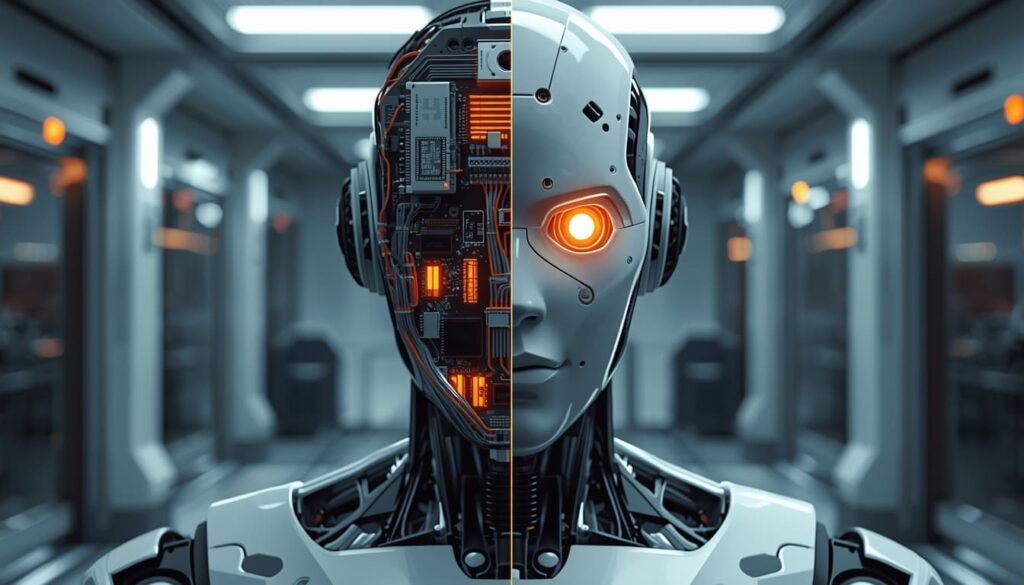
The global industrial landscape is undergoing a profound transformation. Industries are rapidly moving away from the era of “dumb” automation—systems designed only to repeat predefined tasks in isolation—toward an advanced age of cognitive automation, where machines can sense, analyze, and respond intelligently to their environments. At the center of this evolution stands ElectROBOT technology, a multidisciplinary engineering framework that fuses embedded intelligence, electronics, sensing, and software to create machines that think as well as act.
At Embedded School, we clearly recognize that the skills gap between traditional mechanical automation and intelligent robotic systems is expanding at an unprecedented pace. To bridge this divide, we have engineered a future-ready curriculum built around ElectROBOT technology, ensuring that our learners gain not only theoretical understanding but also deep hands-on expertise. By mastering this integrated approach, our students remain aligned with global innovation trends and emerge as professionals capable of leading the next generation of intelligent automation.
Table of Contents
The Great Transition: From Rigid Mechanics to ElectROBOT Technology
To understand where we are going, we must look at where we started. Traditional robotics was the child of the Industrial Revolution’s later stages. It focused on torque, gear ratios, and hydraulic power. While these systems revolutionized car manufacturing and heavy assembly, they were “blind” and “deaf” to their surroundings.
The introduction of ElectROBOT changed the narrative. By embedding high-speed microprocessors and sophisticated sensors into the robotic frame, we have transitioned from machines that “do” to machines that “perceive.”
The Core Philosophies
- Traditional Robotics: Focused on Physical Throughput and Precision.
- ElectROBOT Technology: Focused on Adaptability, Connectivity, and Embedded Intelligence.
While a traditional robot might stop or fail if an object is slightly out of place, a system built on ElectROBOT technology uses real-time computer vision and feedback loops to adjust its grip or path without human intervention.
Defining the Modern Standard: What Is ElectROBOT Technology?
To truly understand the future of intelligent automation, it is essential to clearly define ElectROBOT technology. This term does not refer to a single device, platform, or programming language. Instead, ElectROBOT technology represents a fully integrated engineering ecosystem—one that unifies hardware, electronics, sensing, and intelligent software into a single, responsive robotic system capable of autonomous decision-making.
At its core, ElectROBOT technology is built on the seamless convergence of four foundational engineering pillars. Each pillar plays a critical role, and the absence or weakness of any one element compromises the entire system:
- Embedded Systems – The Brain of the Robot
Embedded systems form the computational core of ElectROBOT technology. High-performance microcontrollers and processors execute real-time control logic, manage communication between subsystems, and ensure deterministic behavior under strict timing constraints. This “brain” enables robots to react instantly to environmental changes—a requirement for advanced automation and safety-critical applications. - Sensory Perception – The Eyes and Ears
Intelligence without perception is ineffective. ElectROBOT technology relies on sophisticated sensing systems such as LiDAR, ultrasonic sensors, infrared modules, cameras, and inertial measurement units (IMUs). These components allow robots to interpret their surroundings, detect obstacles, measure orientation, and respond dynamically to real-world conditions. Sensory perception transforms machines from passive tools into aware, adaptive systems. - Power Electronics – The Nervous System
Power electronics act as the nervous system of ElectROBOT technology, regulating energy flow between batteries, motors, sensors, and processors. Efficient power management ensures stability, performance, and safety—especially in mobile and high-load robotic systems. Precision motor drivers, voltage regulators, and protection circuits enable smooth motion control and long-term reliability. - Software Intelligence – The Mind Behind Decisions
Software intelligence gives ElectROBOT technology its autonomy. Advanced algorithms process sensor data, apply control strategies, and enable learning, optimization, and decision-making. From real-time operating systems (RTOS) to AI-driven logic and adaptive control models, software transforms raw data into meaningful action.
At Embedded School, we emphasize that mastering ElectROBOT technology demands a holistic, system-level understanding of how these four pillars interact. Hardware without intelligent software is lifeless. Software without reliable electronics is powerless. Sensors without processing lack purpose. True expertise lies in knowing how to balance and integrate every layer into a cohesive, high-performing robotic system.
Comparing the Skill Sets: Traditional vs. Modern
If you are looking to build a career, you need to know which skills will actually get you hired. The requirements for ElectROBOT technology differ significantly from the legacy robotics path.
Mechanical Design vs. Embedded Firmware
In the past, a robotics engineer spent 80% of their time on CAD models and material stress tests. Today, while mechanical integrity matters, the bulk of the innovation happens in the firmware. Prototyping in ElectROBOT technology involves writing efficient Embedded C code that can handle multi-threaded tasks across a microcontroller.
Fixed Logic vs. Sensor Fusion
Traditional systems used simple limit switches. In contrast, ElectROBOT utilizes sensor fusion—the ability to take data from multiple sources (like a camera and a proximity sensor) and combine them into a single, accurate picture of the environment.
Isolated Operation vs. IoT Connectivity
Modern industry demands data. A robot is now an IoT node. Through ElectROBOT technology, machines report their own health status, energy consumption, and productivity metrics to the cloud in real-time.
Why ElectROBOT Technology Is the Smartest Career Move
The modern job market is a direct reflection of evolving industrial priorities. As factories, infrastructure, and enterprises rapidly transition toward Industry 4.0, traditional roles such as “robot operator” are steadily being phased out. In their place emerges a far more valuable and future-proof role: the systems integrator—a professional who understands how electronics, embedded systems, sensors, software, and mechanics work together as one intelligent unit. Mastering ElectROBOT technology positions you squarely in this high-impact role, empowering you to design, integrate, and optimize complex robotic ecosystems rather than merely operate them.
Unlike conventional robotics training that focuses on isolated skills, ElectROBOT equips professionals with a system-level mindset. You become an architect of intelligent machines—capable of building solutions that are adaptive, scalable, and autonomous. This expertise is precisely what modern industries demand, as intelligent automation becomes central to productivity, safety, and innovation across the global economy.
High Demand Across Diverse Sectors
The impact of ElectROBOT technology extends far beyond traditional manufacturing floors. Its influence is reshaping multiple high-growth sectors, including:
- Surgical Robotics: Where ultra-precise embedded electronics and intelligent control systems powered by ElectROBOT technology enhance accuracy, reduce human error, and save lives in critical medical procedures.
- Agri-Tech Automation: From autonomous tractors to smart drones, ElectROBOT technology enables precision farming by optimizing irrigation, monitoring soil health, and maximizing crop yields with minimal human intervention.
- Smart Logistics and Warehousing: Advanced warehouse robots—such as those used in global fulfillment centers—rely on ElectROBOT technology-based navigation, sensor fusion, and real-time decision-making to operate efficiently in complex, fast-moving environments.
By building expertise in ElectROBOT technology, professionals gain access to a wide spectrum of career opportunities that transcend industries. This adaptability makes it not just a smart career choice—but one of the most resilient and rewarding paths in the era of intelligent automation.
Deep Dive: Core Competencies You Need to Master
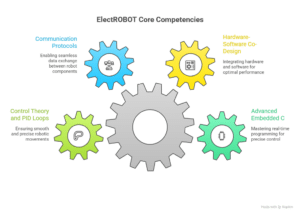
To become an expert in ElectROBOT technology, you need a roadmap. Here are the core competencies we emphasize at Embedded School:
Advanced Embedded C and Real-Time Operating Systems (RTOS)
Since ElectROBOT technology relies on micro-second timing, you cannot rely on standard “linear” programming. You must learn how to manage tasks, interrupts, and memory effectively.
Hardware-Software Co-Design
In ElectROBOT technology, the hardware and software are developed in tandem. You need to understand how your code affects the physical power consumption of the battery and how electromagnetic interference might affect your sensor readings.
Communication Protocols (SPI, I2C, CAN, MQTT)
A robot is a “conversation” between parts. ElectROBOT technology requires mastery of internal protocols (like CAN bus for automotive robotics) and external protocols (like MQTT for cloud communication).
Control Theory and PID Loops
Making a robotic arm move smoothly—not jerkily—requires mathematics. ElectROBOT technology implements PID (Proportional-Integral-Derivative) controllers within the firmware to ensure fluid, human-like motion.
The Embedded School Advantage
Choosing the right institute is critical when your goal is to master a complex, multidisciplinary field like ElectROBOT technology. At Embedded School, our advantage lies in a clear and uncompromising principle: a Hardware-First learning philosophy. True expertise in ElectROBOT technology cannot be developed through videos or simulations alone—it must be built through direct interaction with real electronic systems, real code, and real-world challenges.
Our state-of-the-art laboratories are purposefully designed to replicate industrial environments and practical constraints. When you learn ElectROBOT with us, you work hands-on with ARM Cortex-based microcontrollers, industrial-grade sensors, motor drivers, and power electronics—the same components used by leading global technology companies. Students are pushed beyond theoretical comfort zones and trained to diagnose real electrical faults, optimize embedded firmware, and solve system-level integration issues that engineers face in production settings every day.
Curriculum Highlights at Embedded School
Our ElectROBOT-focused curriculum is carefully structured to develop deep technical competence and professional confidence:
- Comprehensive Circuit Design: Gain a strong understanding of the “Elect” in ElectROBOT technology by designing and analyzing power circuits, signal conditioning modules, and protection systems essential for reliable robotic operation.
- Firmware Mastery: Learn to write low-level embedded drivers from scratch, enabling precise control over hardware resources and real-time performance—an essential skill for advanced ElectROBOT technology applications.
- Project-Based Learning: Apply your knowledge by building autonomous rovers, intelligent robotic manipulators, and sensor-driven systems that clearly demonstrate the real-world power and scalability of ElectROBOT.
This immersive, hardware-driven approach ensures that graduates of Embedded School do not just understand ElectROBOT technology—they can implement it confidently, efficiently, and professionally in any industrial or research environment.

The Future of Automation: AI Meets ElectROBOT Technology
The next phase of industrial evolution is being shaped by the convergence of artificial intelligence and embedded intelligence. As we move into 2026 and beyond, automation is no longer limited to predefined logic or static control systems. Instead, ElectROBOT technology is advancing toward intelligent, adaptive machines capable of learning, reasoning, and improving performance over time—directly at the hardware level.
This shift marks a critical transformation in how robots operate. Rather than relying on cloud-based intelligence, modern systems are designed to think locally, respond instantly, and operate reliably even in disconnected or high-risk environments. This is where ElectROBOT technology becomes the foundation of next-generation robotics.
Edge AI: Intelligence Inside the Robot
One of the most powerful advancements shaping the future is Edge AI, where machine learning models are deployed directly onto microcontrollers and embedded processors. With ElectROBOT technology, intelligence is no longer centralized in remote servers—it lives inside the robot itself.
This means a robot can analyze sensor data in real time, make decisions instantly, and adapt its behavior without latency. For example, instead of merely following a preprogrammed route, an ElectROBOT-powered system can learn the most efficient path, avoid obstacles dynamically, and optimize its movement patterns over time. This level of autonomy dramatically improves performance, safety, and efficiency across industrial and consumer applications.
Machine Learning on Microcontrollers
ElectROBOT technology is now expanding to include TinyML and embedded neural networks, allowing complex AI models to run on low-power microcontrollers. This breakthrough enables intelligent perception, predictive maintenance, and anomaly detection directly on robotic platforms.
By embedding machine learning models into ElectROBOT systems, robots gain the ability to recognize patterns, classify objects, and respond intelligently to environmental changes. This evolution transforms robots from reactive machines into proactive systems capable of decision-making at the edge—an essential requirement for modern automation.
The Skills That Will Define the Next Decade
As AI-driven ElectROBOT technology becomes mainstream, the demand for engineers who understand both embedded systems and artificial intelligence will surge. Professionals who can deploy neural networks on microcontrollers, optimize models for power efficiency, and integrate AI with real-time control systems will be among the most sought-after talents in the global tech ecosystem.
This fusion of AI and ElectROBOT technology will define the next decade of engineering careers. From smart manufacturing and autonomous vehicles to healthcare robotics and intelligent logistics, the future belongs to those who can bridge the gap between intelligent software and embedded hardware.
ElectROBOT Technology as the Foundation of Future Engineering
Ultimately, the future of robotics is not just about smarter algorithms—it is about intelligent systems engineered from the ground up. ElectROBOT technology provides the framework where AI, electronics, and embedded control merge seamlessly into autonomous machines that learn, adapt, and evolve.
Engineers who invest in mastering ElectROBOT technology today are positioning themselves at the forefront of innovation tomorrow. As industries move rapidly toward intelligent automation, ElectROBOT technology will remain the cornerstone of advanced robotics and edge-driven AI systems worldwide.
Frequently Asked Questions
1. Do I need a Mechanical Engineering background to learn modern robotics?
Not at all. While traditional robotics focused heavily on mechanical design, modern robotics emphasizes embedded programming, electronics, and intelligent control systems. Learners from Computer Science, IT, Electronics, and Electrical backgrounds often adapt quickly and perform exceptionally well.
2. How long does it take to become job-ready in robotics and automation?
With a structured, hands-on training program, most learners can achieve industry-ready skills within 6 to 12 months. The learning pace depends on prior exposure to programming, basic electronics, and problem-solving concepts.
3. Is robotics training useful for EV and automotive careers?
Yes. Robotics skills are fundamental to electric vehicles and autonomous driving systems. These industries rely on motor control, sensor integration, embedded controllers, and real-time data processing—core competencies taught in advanced robotics programs.
4. Can robotics be learned fully through online courses?
Online learning is effective for theory, but robotics is a physical discipline. True mastery requires working directly with microcontrollers, sensors, motors, and real circuits to understand how software interacts with hardware in real-world conditions.
5. What career roles are available after completing a robotics course?
Graduates can pursue high-demand roles such as Embedded Robotics Engineer, Automation Engineer, IoT Systems Developer, Control Systems Engineer, and Drone or UAV Developer. These roles are among the fastest-growing career paths in the global technology market.
Conclusion: Your Path Forward
The shift from traditional robotics to ElectROBOT is far more than a passing technological trend—it represents a structural transformation in how industries design, build, and deploy intelligent machines. As automation systems become smarter, more connected, and increasingly autonomous, the expectations placed on robotics professionals are rising rapidly. Success in this new era demands not just mechanical knowledge, but deep expertise in embedded systems, electronics, intelligent control, and system integration—all core elements of ElectROBOT technology.
Choosing to specialize in ElectROBOT is a strategic investment in long-term career growth. These skills offer exceptional versatility, enabling professionals to work across high-impact sectors such as aerospace, healthcare automation, smart manufacturing, robotics research, and advanced consumer electronics. With intelligent automation becoming the backbone of Industry 4.0, professionals trained in ElectROBOT technology are positioned not just as employees, but as innovators and solution architects shaping the future.
At Embedded School, we are committed to guiding learners through this complex yet rewarding journey. Our hands-on, industry-aligned training equips students with the confidence and competence required to move beyond the limitations of traditional automation. If you are ready to design intelligent machines, solve real-world challenges, and build a career powered by embedded intelligence, then now is the time to master ElectROBOT technology—because the future is being built today, and it belongs to those who are prepared.